
No driver wants to freeze or burn while they’re driving their car down the road.
Find Your Online Car Repair Manual Today! ->>
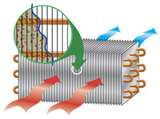
The heater core then transfers the heat to the interior compartment by recirculating air from inside the car across the heater core fins.
This continued cycle of heating the air inside the vehicle is extremely efficient.
Heater control problems
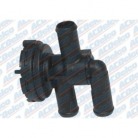
In the closed position to heater control valve allows no hot coolant to enter the heater core. In the open position the part allows engine heated coolant to circulate through the firewall mounted core.
Consult your online auto service manual for specific locations on your vehicle.
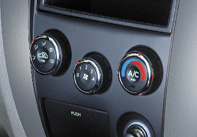
Cable operated types are control directly from the control lever on the dash mounted climate control center.
Thermostatically controlled valves feature a liquid filled capillary tube located in the discharge air stream of the heater core. This will accurately determine the air temperature blowing at the driver.
A thermostat control valve will modulate the flow of hot water to maintain a constant temperature selected by the driver.
The most common type of heater control valve would be to vacuum operated type. These valves are normally located in the heater hose input line going to the core. They can also be mounted directly in the engine block itself.
When the temperature selection on the dashboard is changed the valve is vented and then returns to its natural position.
Vacuum actuating heater control valves are either normally open or normally closed designs. Some vehicles do not use a heater control valve at all, but most do.
On modern vehicles it is hard to find a control valve that is not made out of plastic. This is great at reducing corrosion, but the lightweight of the valve can also make it unreliable Late in its life.
The most common causes for replacing a heater control valve would actually be an external leak from the valve body itself. If your vehicle has a lack of heat and this valve is not leaking.
Be sure to follow your diagnostic chart in your auto repair manual. Many other vehicles related problems could cause a no heat condition. The heater control valve is just one of these items.
You can visit my Diy auto repair website for more information on the theory and operation of automobile AC climate control.